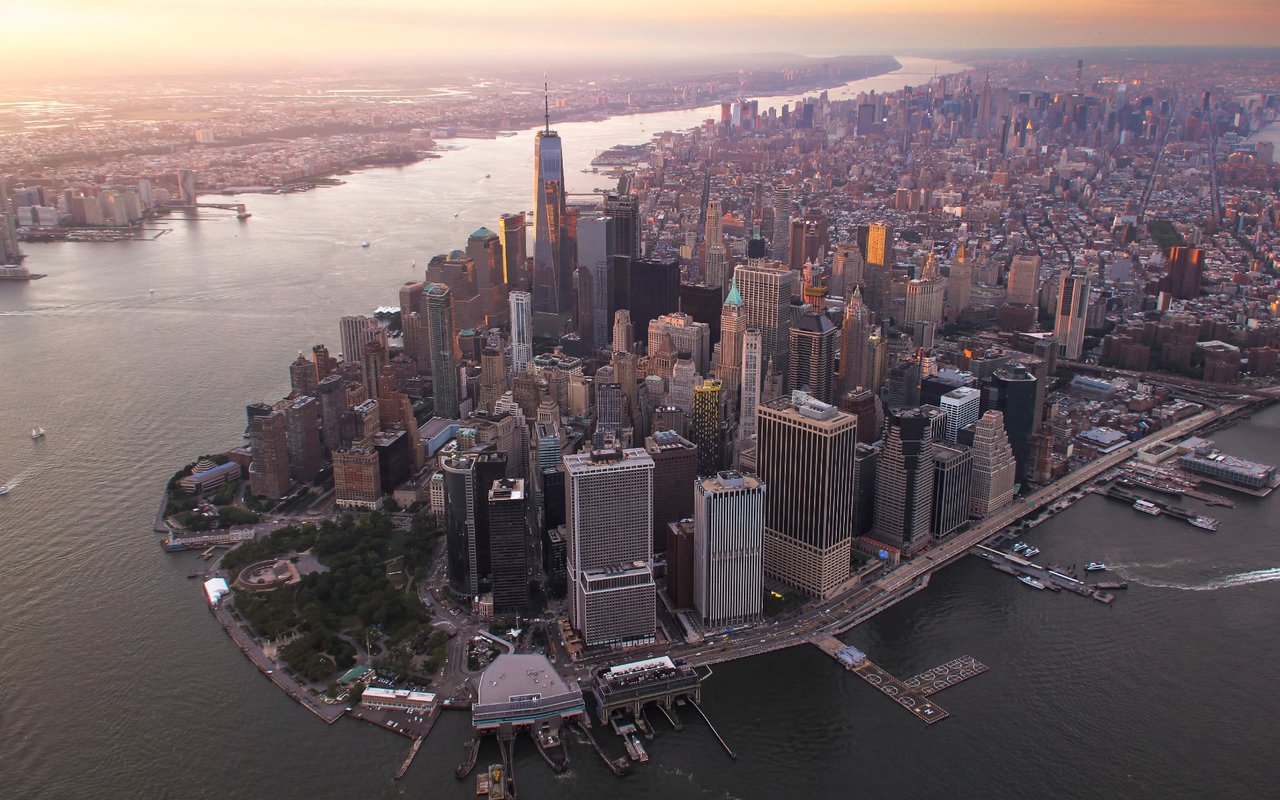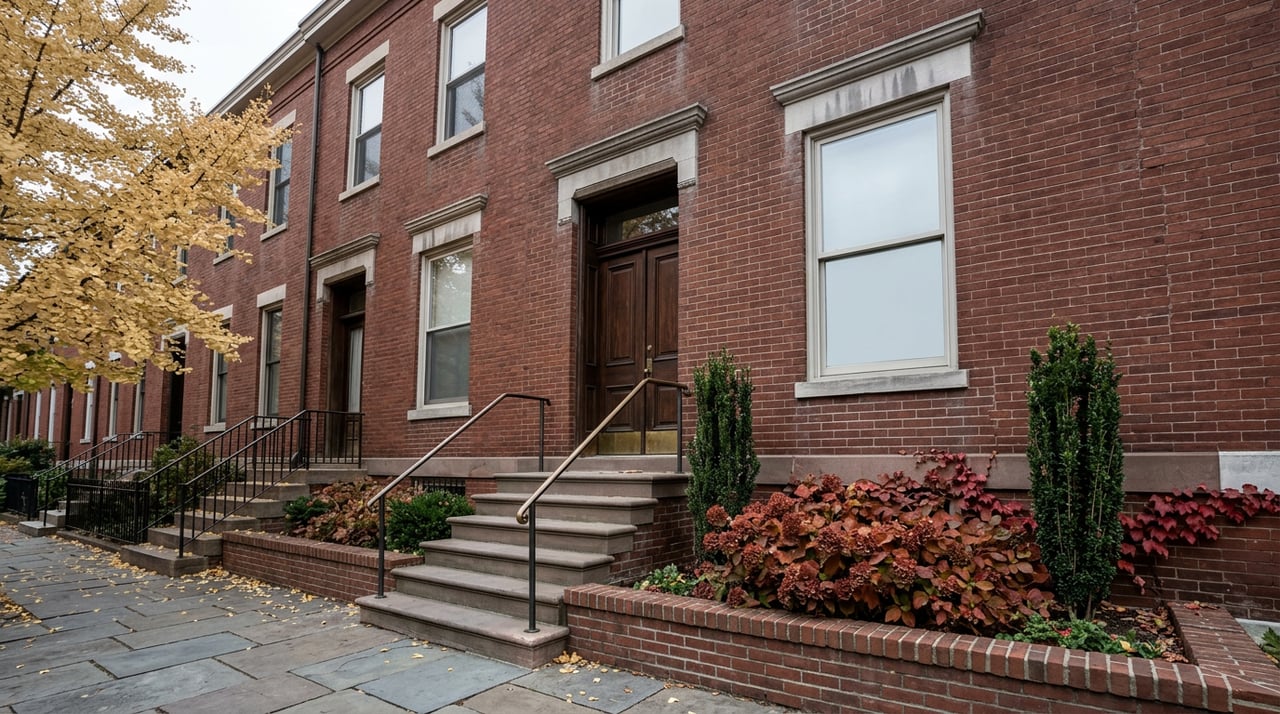
Walk past 144 West 125th Street on a Friday night now and you'll find the glass doors open until nine, light spilling onto the sidewalk, people climbing the stairs toward a rooftop terrace that didn't exist two years ago. For most of the last decade, that stretch of 125th was a plywood wall. The Studio Museum in Harlem spent seven years without a building, running its exhibitions out of borrowed rooms at other institutions while its actual home got torn down and rebuilt from scratch. It reopened to the public on November 15, 2025, and the block around it has been figuring out what to do with itself ever since.
That reopening is the obvious story. The less obvious one is who showed up to feed the place, and it turns out to be names Harlem already knew.
Seven Years, One Building, One Café
The new Studio Museum is not a renovation. It's an 82,000-square-foot building designed by Adjaye Associates with Cooper Robertson as executive architect, seven floors tall, with a rooftop terrace designed by Studio Zewde, a landscape architecture firm founded by Sara Zewde and based right there in Harlem. The museum's own capital campaign raised more than $300 million to get it built. None of that is a secret. What's easy to miss, tucked into the ground floor, is who runs the café.
The lower level belongs to Settepani, the longtime Harlem Italian spot that's been making pastries and pressed sandwiches in the neighborhood for years. That's not surprising on its own. What's worth noticing is that Settepani didn't stop there. The same operation is also running the concession stand at the Davis Center, serving the same rotation of hot and cold drinks, pastries, soups and small sandwiches out of a second building entirely. A neighborhood bakery expanding is normal. A neighborhood bakery becoming the default food answer for two separate institutions in the same season is a pattern, not a coincidence.
When a museum with a nine-figure capital campaign and a national architecture firm behind it needs someone to run its café, it picked a shop its own neighbors already trusted. That's a better read on the block than any exhibition schedule.
CUP Moves Into The Africa Center
Settepani isn't the only local name multiplying. CUP, short for Coffee Uplifts People, is a fair-trade coffee brand co-founded by radio personality Angela Yee along with Tony Forte and LaRon Batchelor. It started as a café in Bed-Stuy. This year it opened a second location inside The Africa Center, on Fifth Avenue, taking over the ground-floor space that used to belong to Teranga.
Put those two moves side by side and the shape becomes clear. These aren't national chains parachuting into Harlem because the real estate finally penciled out. They're operators who already had a foothold somewhere in the neighborhood, or one borough over, expanding into institutional buildings that could have hired anyone. The Studio Museum could have brought in a hospitality group. The Africa Center could have run its own café. Both picked names that were already known quantities to the people who'd actually walk through the door.
Frederick Douglass Boulevard Hasn't Slowed Down Either
None of this is happening in a vacuum. Frederick Douglass Boulevard has carried Harlem's restaurant identity for well over a decade, and it's still adding storefronts on its own schedule, a few avenue blocks west of the museum.
- Copperleaf Bakery, at 2118 Frederick Douglass Boulevard, opened as a breakfast and lunch spot with a seat-yourself dining area, its own croissants and sourdough, and a menu that stretches from ube cheesecake to soup and wine.
- Native Harlem, at 2319 Frederick Douglass Boulevard, established in 2025, pairs modern Nigerian cooking with a stage built for live Afrobeats performances and an evening-chic dress code.
- Sugar Monk, at 2292 Frederick Douglass Boulevard, built its name on Japanese-inspired small plates and cocktails, and it's held onto its Tuesday night jazz slot as one of the few recurring jazz bookings left on that stretch of the boulevard.
- Harlem Tavern, at 2153 Frederick Douglass Boulevard near West 116th Street, keeps a beer garden going alongside a jazz brunch on Saturdays and Sundays and live music on Tuesdays and Wednesdays, with room for gatherings up to 400 people.
That's a corridor that was already working before the museum reopened, and it's still working now. The two corridors are close enough to walk between in fifteen minutes, though each keeps its own schedule.
Two Corridors, One Set of Regulars
Here's the actual shift worth paying attention to. Frederick Douglass Boulevard has long been a destination for an evening out in Harlem. The museum's return adds another option on 125th Street, with free admission on Sundays and extended hours through nine on Fridays and Saturdays.
What connects the two corridors isn't proximity. It's that the people filling the new spaces on both sides of the neighborhood keep turning out to be the same handful of locally rooted names, just showing up in a second building. Settepani didn't need a second identity to run a museum café. CUP didn't need to rebrand to open inside a cultural institution on Fifth Avenue. The neighborhood's newest openings are less a wave of newcomers than an old cast of characters getting handed bigger rooms.
If you're deciding how to spend a free evening this fall, that's the practical takeaway. On Fridays and Saturdays, the museum's extended hours make an after-work stop on 125th an option. Sundays are free, which makes a slow morning at the rooftop terrace an easy add to a walk through the neighborhood. Tuesdays still belong to Sugar Monk's jazz set on Frederick Douglass Boulevard, and the weekend brunch crowd at Harlem Tavern hasn't gone anywhere. None of this requires picking a side. The two corridors run on different clocks, which means a single week in Harlem can now include both without anyone having to choose.
For anyone tracking the neighborhood's day-to-day rhythm rather than its market data, that's the real update this season. Not a list of new addresses, but a shift in who's trusted to fill them.
Piere Michel keeps a close eye on how Harlem's neighborhoods actually live day to day, not just how they list. If you want a closer read on the area or you're weighing a move within Manhattan, Brooklyn, or Queens, reach out to Piere Michel and book an appointment with someone who knows these blocks firsthand.