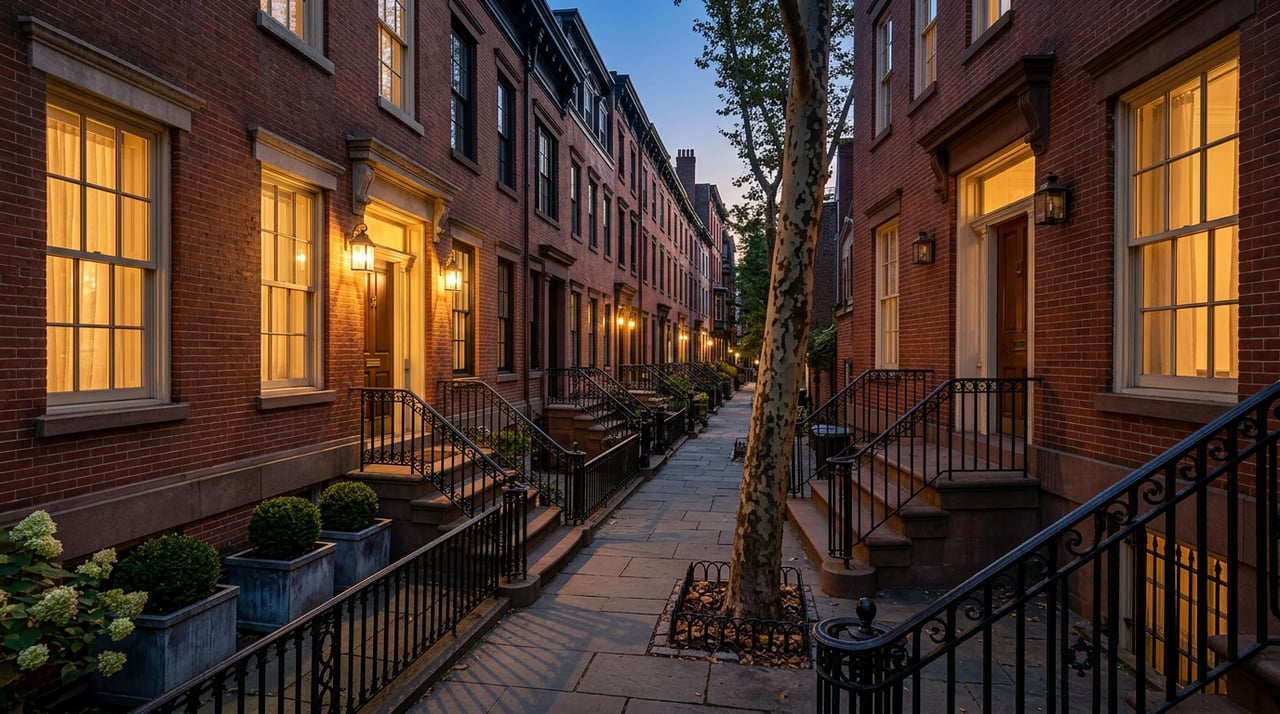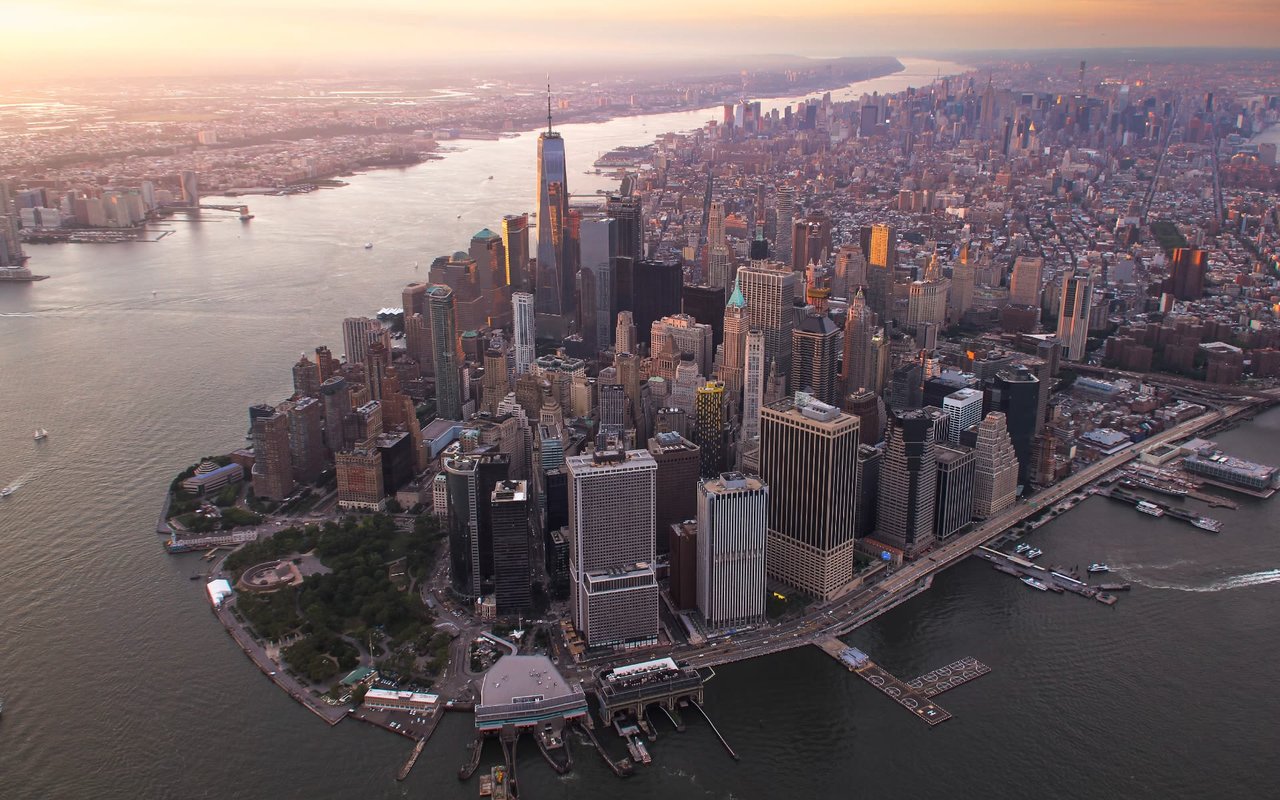
The two big museums in Murray Hill and Turtle Bay are about a dozen blocks apart, and this fall they're telling the same story. Starting Friday, October 23, the Morgan Library & Museum on Madison Avenue is showing Rembrandt as an artist shaped by a city of refugees. A week later it adds a Swedish sculptor who found his style during more than a decade in Rome. Japan Society on East 47th Street has been showing the New York years of a Japanese modernist since October 6. Each show is about an artist who did his defining work far from where he started, and the Inokuma show is about an artist who came here.
Amsterdam, Where Up to 60 Percent of Residents Came From Somewhere Else
"Rembrandt's Lions: Art and Exile in the Dutch Republic" opens Friday, October 23, and runs through January 31, 2027. The Morgan's press release starts with a population figure. In the seventeenth century, up to 60 percent of Amsterdam's residents came from elsewhere. Religious and political wars had displaced hundreds of thousands of people, and the Dutch Republic, which had established a right to personal religious freedom, became a refuge. People who settled there were often called strangers or exiles.
The lions come from Saint Jerome, one of the saints Rembrandt drew most often. According to legend, Jerome went into a self-imposed exile in the desert, pulled a thorn from a lion's paw, and the lion stayed with him from then on. The release reads the pair in Rembrandt's etchings as compassion and loyalty in hard times, a story that made sense to the many newcomers in the republic.
Curator Sarah Mallory, the Morgan's Annette and Oscar de la Renta Assistant Curator of Drawings and Prints, ties the show directly to the city outside the museum's doors. In the Morgan's announcement, she says:
"A pivotal moment in Dutch history compelled Rembrandt to make art, and this exhibition gives visitors the opportunity to consider the parallels between Rembrandt's Amsterdam, New Amsterdam, and New York City."
The show has six sections:
- Pride of Lions: how the founding of the Dutch Republic made Amsterdam a haven for exiles, and how Saint Jerome fits into Rembrandt's work.
- Republic of Refugees: migrant, immigrant, and exiled communities, both in the Bible and in Amsterdam.
- The Lion's Share: the Dutch Republic's global stories and colonial aggression.
- Home/Lands: the Amsterdam neighborhoods where migrant communities lived, seen through the eyes of Rembrandt, who lived among them.
- Fitting In: Rembrandt as a portraitist, and the techniques he developed to push etching forward.
- Beyond Belonging: the end of Rembrandt's life and his depictions of marginalized figures.
The release lists these highlights: Self-Portrait with Raised Sabre from 1634, St. Jerome Kneeling in Prayer, Looking Down from 1635, The Flight into Egypt: A Night Piece from 1651, the 1639 portrait Manasseh Ben Israel, three impressions of The Three Crosses, and The Hundred Guilder Print. Two loans come from outside the Morgan's collection. One is the drawing Recumbent Lion from the Rijksmuseum in Amsterdam. The other is the painting The Mill from the National Gallery of Art in Washington.
If you want the curator's take before you walk the galleries, the Morgan is hosting a free lecture, "Rembrandt's Lions: Make Art, Not War," on opening night, Friday, October 23, from 6 to 7 p.m. The museum encourages registering in advance.
A Week Later, the Same Building Adds a Swede Who Found Himself in Rome
On October 30, the Morgan opens "Fantasy and Reality: The Art of Johan Tobias Sergel." It runs through January 31, 2027, so it closes the same day as the Rembrandt show. Sergel spent more than a decade in Rome, working among international artists and patrons, before King Gustav III called him back to Sweden.
The Rembrandt show looks at a city full of newcomers. This one looks at a single newcomer's working life. The exhibition includes his sculpture alongside his drawings, which serve as a personal record of friendships, court relationships, family life, travels, self-portraits, and caricatures. The Morgan's release highlights two terracotta versions of Cupid and Psyche and the 1774 marble The Faun, shown with preparatory material and a related bronze. It also names the drawings Self-Portrait with a Flask of Wine and A Torturous Dream from his Melancholy Suite.
Sweden's Nationalmuseum organized the show in partnership with the Morgan. The museum holds most of Sergel's surviving work because it acquired the contents of his studio from his descendants. At the Morgan, the presentation is organized by John Marciari, Charles W. Engelhard Curator, Department Head of Drawings and Prints, and Director of Curatorial Affairs.
On East 47th Street, the Arrival Story Is About New York
The Morgan shows look back to seventeenth-century Amsterdam and eighteenth-century Rome. Japan Society's show is set in Manhattan. "Gen'ichirō Inokuma's NYC Salon" is the first New York solo museum exhibition for the Japanese modernist, who lived from 1902 to 1993. It covers his twenty years living in New York, from 1955 to 1975, including the paintings he showed at the Willard Gallery and his multimedia work.
The New York chapter came after a lot of travel. Inokuma and his wife, Fumiko, lived in France from 1938 to 1940 and traveled around Europe, meeting Picasso and Matisse. After the war, he painted public murals as part of Japan's early reconstruction. In Manhattan, his circle included Jasper Johns, Mark Rothko, Robert Rauschenberg, Alexander Calder, Isamu Noguchi, Yoko Ono, John Cage, and Merce Cunningham. The Inokumas also connected American artists with visiting Japanese artists and architects, often hosting gatherings at their New York apartments. Fashion Headline identifies one of those homes as 115 East 95th Street, where the couple lived from 1957 to 1968.
The same outlet lists Willard Gallery works in the show, including White Hole from 1960, Teenagers from 1962, Snake Line and Black Circle from 1964, Water Shores A from 1970, and Landscape from 1972. The show also includes a 1955 map tracing his trip across the United States, along with 8mm films, correspondence, and design objects. The exhibition brings together holdings from the Marugame Genichiro-Inokuma Museum of Contemporary Art in Japan, Japan Society's own collection, and the recently discovered Hirose Family Collection.
Three Friday Evenings Line Up Across Both Museums
Since all three shows are about arriving somewhere new, seeing them together makes sense. The schedules help. Every Friday, the Morgan offers free admission from 5 to 8 p.m. Reservations are required and open one week in advance. Japan Society's Free First Fridays run from 5 to 7 p.m. Three of those Free First Fridays fall while all three shows are open.
| Exhibition | Venue | Dates | Adult admission | Free window |
|---|---|---|---|---|
| Rembrandt's Lions | The Morgan, 225 Madison Ave. | Oct. 23, 2026 – Jan. 31, 2027 | $25 | Fridays, 5–8 p.m., reservation required |
| Fantasy and Reality: Sergel | The Morgan, 225 Madison Ave. | Oct. 30, 2026 – Jan. 31, 2027 | Included with general admission | Fridays, 5–8 p.m., reservation required |
| Gen'ichirō Inokuma's NYC Salon | Japan Society, 333 E. 47th St. | Oct. 6, 2026 – Jan. 10, 2027 | $20 | Nov. 6, Dec. 4, Jan. 8, 5–7 p.m. |
On November 6, December 4, and January 8, you can start on East 47th Street at 5 p.m. and walk down to Madison and 36th while the Morgan is still free until 8. November 6 is also the day the Morgan opens a third fall show, "Graphic Devotions: Late Medieval European Blockbooks," which runs through May 16, 2027.
Paid visits are easy to plan too. The Morgan is open Tuesday through Sunday from 10:30 a.m., closes at 5 p.m. except on Fridays, when it stays open until 8, and is closed Mondays. Seniors 65 and over pay $17, students pay $13, and children 12 and under get in free with an adult. Special exhibitions are included with general admission. Japan Society's gallery is open Tuesday through Friday from 11 a.m. to 5 p.m. and on weekends from noon to 6 p.m. Students and seniors pay $15. Japan Society's ticketing page lists the exhibition's end date as January 10, 2026. The exhibition page gives January 10, 2027, which is the correct date.
Where to Eat Between Madison and First
The Morgan Café, in the museum's glass atrium, serves full meals, afternoon tea, pastries, and wine. It's open until 4 p.m. most days and until 7:30 p.m. on Fridays, and you don't need a reservation. On a free Friday, that gives you time to eat before the galleries close.
Two of the closest new restaurants are newcomers to the neighborhood themselves. Eater reported that Kjun, the Korean-Cajun restaurant, opened its new Murray Hill location at 334 Lexington Avenue on February 24. Its former East 39th Street address is now used only for private events. Super Burrito, which serves San Francisco Mission-style burritos, opened its fourth location at 495 Third Avenue in mid-June, Eater reported.
Closer to Japan Society, Sakagura serves sake and tapas-style izakaya dishes in a basement at 211 East 43rd Street. It's open for lunch and dinner Monday through Saturday and closed Sunday. The Infatuation included it in its 2026 guide to the city's Japanese restaurants.
For more about the blocks between these two museums, including the old carriage houses that have become renovated homes, see our Murray Hill and Turtle Bay neighborhood guide.
If you love living a short walk from the Morgan and Japan Society and want your next home to keep you close to them, the team at Piere Michel can help you find a place that fits your budget and your routine in Murray Hill and Turtle Bay. Book an Appointment and we'll start with the streets you already know.